Sabah’s 17th state election was held on 29 November 2025, and it was never purely a local affair. A record 596 candidates, including 74 independents, contested the 73 seats of the state legislative assembly, and the result has since been read as a signal about how Malaysia’s federal politics may evolve before the next national vote. The five points below set out what happened, what it changed, and what to watch next.
For observers outside Malaysia, the contest was notable less for who won than for how the votes realigned. The result has been widely treated as a test of how far a Peninsular-based federal coalition can carry its message into Borneo, an interpretation reflected in regional Southeast Asia coverage of the vote. That framing matters because Sabah and Sarawak together decide a meaningful share of seats in the federal parliament, and their political preferences do not always track those of the peninsula.
What the official results actually show
No single party or coalition crossed the 37-seat threshold needed for a simple majority in the 73-seat assembly. The largest bloc was Gabungan Rakyat Sabah (GRS) with 29 seats, followed closely by Warisan with 25. The remainder was scattered across smaller parties and independents, which is what turned the days after polling into a negotiation rather than a formality.
| Party or coalition | Seats won (of 73) |
|---|---|
| Gabungan Rakyat Sabah (GRS) | 29 |
| Warisan | 25 |
| Barisan Nasional (BN) | 6 |
| Independents | 5 |
| UPKO | 3 |
| STAR | 2 |
| Perikatan Nasional (PN) | 1 |
| Pakatan Harapan (PH, via PKR) | 1 |
| KDM | 1 |
Source: official Election Commission results as reported by Malay Mail and CNA on 30 November 2025. A simple majority required 37 of 73 seats.
One detail is easy to miss. According to an official tally cited by Bernama, GRS and Warisan were separated by roughly 0.15 percentage points in the votes they gathered in the seats they won, even though GRS finished four seats ahead. Under Malaysia’s first-past-the-post system, that gap translated into a much larger difference in seats than in support – and only 16 of the 73 seats, or 21.9%, were won with more than half of the votes cast, according to an analysis by Malaysiakini.
1. Local parties now own Sabah’s political map

The clearest pattern in the result was the strength of Sabah-based parties. Local parties headquartered in the state accounted for 65 of the 73 seats, with national coalitions reduced to a handful. The Democratic Action Party (DAP), which had won six of the seven seats it contested in 2020, lost all eight seats it contested in 2025, while PKR secured a single seat. Taken together, the national coalitions that form the federal government and the federal opposition won about eight seats, down from roughly 33 at the previous state election.
Analysts quoted in CNA’s post-election analysis read the swing as a preference for homegrown leadership rather than a rejection of any single party. Whatever the cause, the practical effect is that federal parties now have to work with state-level blocs to influence Sabah’s 25 parliamentary seats, rather than expecting to win them directly.
2. The result is a stress test for federal-state relations
Because GRS formed the state government with the support of smaller parties and independents, the immediate question – who governs Sabah – was settled quickly, with the chief minister sworn in for a second term. The more durable question is how the federal government now manages a state whose voters demonstrably favoured local over national brands.
Here the commentary genuinely splits, and it is worth holding both views. One camp argues the outcome is a warning that federal-coalition performance is being judged in the states and could shape the next general election. Another, including analysts who spoke to regional outlets and to The Edge Malaysia, argues the result does not threaten the federal government’s parliamentary numbers, because the same East Malaysian blocs that gained ground remain partners in the federal coalition. Both readings agree on one point: Putrajaya can no longer treat Sabah’s support as automatic.
3. The 40% revenue question moved from the campaign trail to the courtroom
For decades, Sabah’s claim to 40% of the net revenue the federal government derives from the state has been a recurring political theme. It is grounded in the Malaysia Agreement 1963 and in Articles 112C and 112D of the Federal Constitution, which provide for a special grant calculated against a 1963 baseline and require periodic reviews. In practice, the review required from 1974 onward had not been carried out as the constitution envisages, which is what took the matter to court.
| Date | Development |
|---|---|
| 17 October 2025 | The Kota Kinabalu High Court allows a judicial review by the Sabah Law Society and orders a review of the entitlement for the period 1974–2021. |
| 29 November 2025 | Sabah holds its 17th state election. |
| 6 April 2026 | The Court of Appeal grants the federal government a stay of the High Court’s order pending an appeal. |
| 29 October 2026 | The appeal is scheduled to be heard by the Court of Appeal sitting in Kota Kinabalu. |
Sources: The Edge Malaysia (6 April 2026); Bernama; Newswav (20 September 2026).
It is important to separate the legal right from the calculation. Constitutional experts cited by Bernama have noted that the entitlement itself is not denied by the appeal; the dispute concerns the method of computing the amount and the timeline for doing so. The federal government has said it accepts the entitlement and is negotiating the mechanism, while challenging parts of the judgment.
4. Borneo’s weight is rising, and Sarawak is the next test
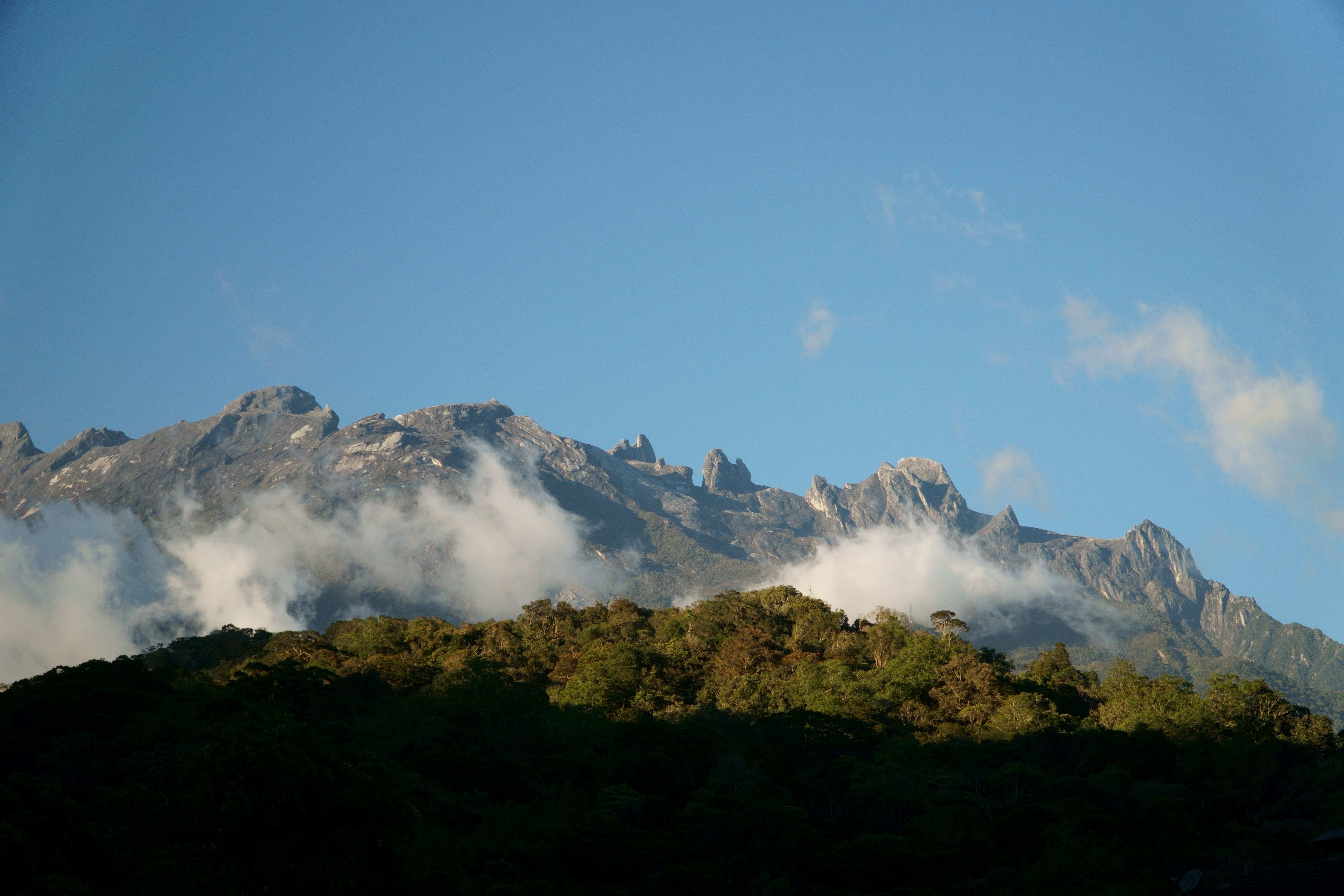
Sabah is part of a broader shift. A 2021 constitutional amendment restored Sabah and Sarawak to equal-partner status within the federation, and negotiations over the 21 listed demands under MA63 have been ongoing, with a majority of the topic areas reported resolved. Resource control remains the hardest item. Sarawak has pursued its own legal route over oil and gas, and the state accounts for a large share of the country’s gas reserves and of the national oil company’s liquefied natural gas sales.
Sarawak’s state election, due by early 2027 and widely expected in the months around late 2026, will be the next occasion on which this regional assertiveness is measured. The Election Commission’s redelineation exercise for Sarawak proposes increasing the state assembly from 82 to 99 seats – a change that could alter how much weight the Borneo bloc carries in future federal arithmetic.
5. GE16’s timing and arithmetic are being recalculated
Malaysia’s next general election, GE16, must be held by early 2028. The prime minister has signalled a preference to serve the full term, while parts of the opposition and some coalition partners have pushed for an earlier vote, possibly around late 2026. Several state elections – including Melaka and Johor – fall before the federal deadline, so the calendar is crowded regardless of the final date.
The arithmetic is straightforward. A simple majority in the 222-seat federal parliament requires 112 seats, and Borneo’s 25 Sabah seats plus Sarawak’s seats make the East Malaysian bloc a likely kingmaker in a close contest. That is why both the state result and the 40% case are being watched in Kuala Lumpur as much as in Kota Kinabalu: they shape the terms on which any future federal government is assembled.
The federal government has also moved on the reform agenda it promised, announcing in January 2026 a proposed ten-year, two-term limit for prime ministers, the separation of the attorney-general’s and public prosecutor’s roles, an ombudsman office and a freedom-of-information bill. How quickly those commitments translate into law is likely to be tested in the run-up to GE16.
What to watch next
- The October 2026 appeal. The Court of Appeal’s ruling on the 40% mechanism will determine how quickly and by what method the entitlement is calculated.
- The Sarawak election. The result will show whether the Borneo-first trend seen in Sabah holds in a state with a different political history.
- The redelineation. Proposed new seats in Sabah and Sarawak could shift the balance in the federal parliament.
- The GE16 calendar. Whether the vote comes early or on schedule will shape how much time the government has to deliver on its reform pledges.
Frequently asked questions
Did any party win a majority in Sabah’s 2025 election?
No. GRS won the most seats with 29, but no bloc reached the 37-seat simple majority in the 73-seat assembly, so a coalition government was formed after the results were announced.
How many seats are needed to govern Sabah?
A party or coalition needs a simple majority of 37 out of 73 seats. With 29 seats, GRS required the support of smaller parties and independents to cross that line.
What is Sabah’s 40% entitlement under MA63?
It is a special annual grant provided for under Article 112C and the Tenth Schedule of the Federal Constitution, calculated as two-fifths of the net revenue the federation derives from Sabah above a 1963 baseline. Article 112D requires periodic reviews of that grant.
Why did the Sabah result matter beyond the state?
Sabah’s 25 parliamentary seats matter in federal elections, and the strong showing by local parties affects how federal coalitions must negotiate for support in Borneo ahead of GE16.
When is Malaysia’s next general election due?
GE16 must be held by early 2028. The exact date depends on when parliament is dissolved, and the government has indicated it intends to serve its full term while some partners have called for an earlier poll.
A local result with federal consequences
The temptation with a state election is to read it as a verdict on the national government alone. Sabah’s result resists that. It shows that in a federation with strong state identities, the decisive contest is often not between national coalitions but between the centre and the regions – and that contest is now being argued in courtrooms, in constitutional negotiations and in the scheduling of the next election. The vote count told us who would sit in Sabah’s assembly; it is what happens in the two years after that will tell us how much the federation has actually changed.